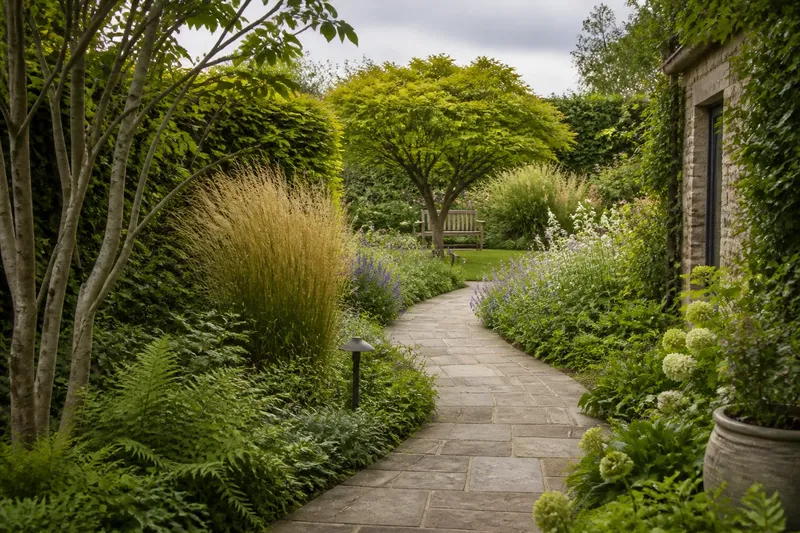
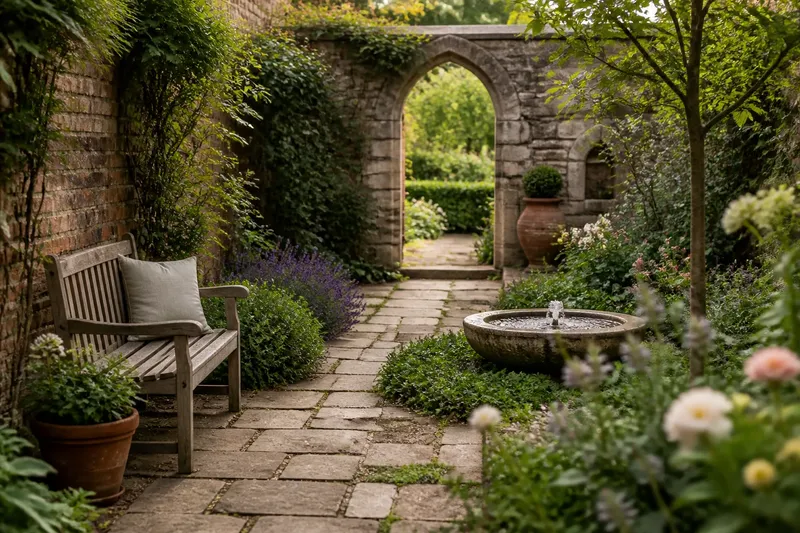
Gravel, Brick or Stepping Stones for a Garden Route?
Compare gravel, brick and stepping stones for a garden route, and choose a surface whose color, texture and rhythm suit the garden’s character.
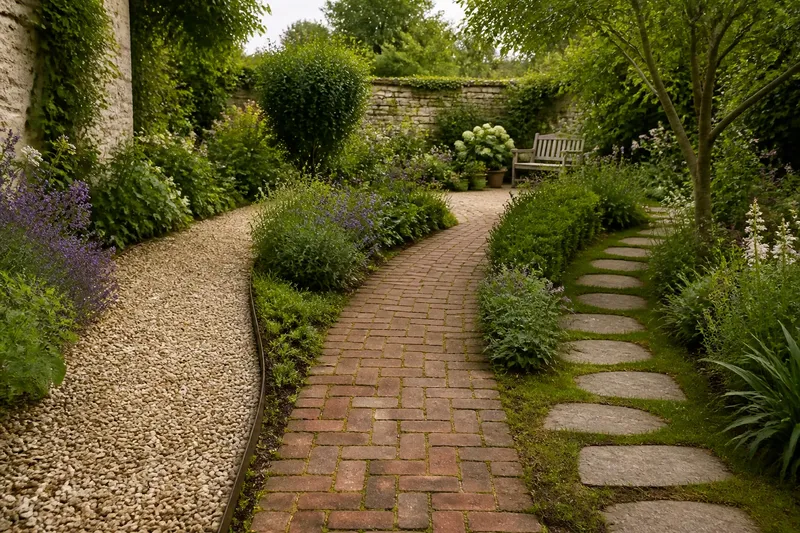
Which garden path surface gives your route the character you want? Gravel, brick and stepping stones each create a different visual rhythm and feel underfoot, even when they lead between the same places. Choosing among them is less about finding one universally best material than deciding how the path should sit within the garden.
Start with the scene around the route: the planting, the house, nearby walls, and the view at the path’s destination. A surface can look quiet and blend in, or become a strong line that organizes what surrounds it. Think of the path as a frame around a picture; its material changes how the garden is read without changing the plants themselves.
Gravel’s Loose Character
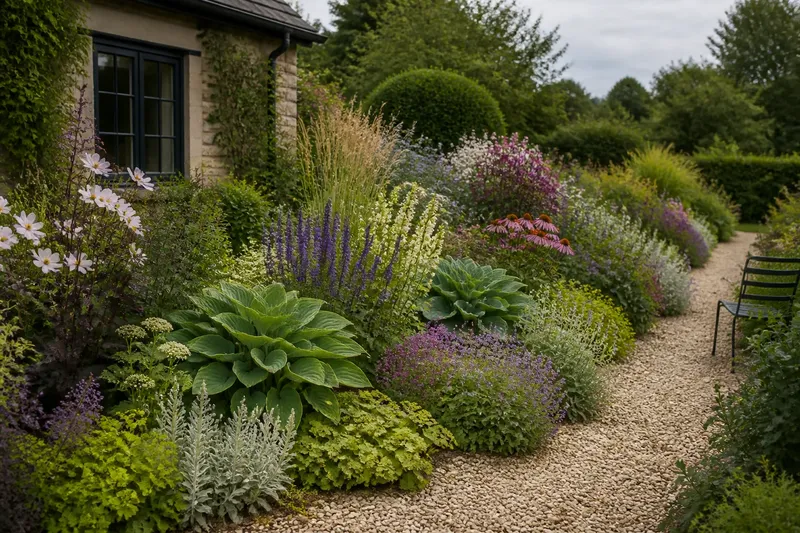
Gravel tends to read as soft-edged and informal. Its small pieces create a fine, shifting texture that can connect planting beds, open lawns, and less formal parts of a garden without drawing a hard line through them. Pale gravel reflects light and can lift a shaded route; darker gravel often recedes and lets foliage take more attention.
There is no single “gravel look.” Rounded pea gravel has a gentler, more fluid appearance, while angular crushed stone creates a sharper surface. Color matters just as much: warm buff tones can echo brick or dry soil, and cool gray can relate to stone walls or silvery foliage. A sample placed beside the actual plants and masonry is more informative than a color seen alone.
The feel is loose and audible. Footsteps shift the pieces, producing a crisp crunch and a surface that gives slightly rather than feeling like a continuous slab. That quality suits a relaxed garden atmosphere, but it may feel visually restless beside tightly clipped planting or a very formal façade.
Gravel also creates a clear boundary between route and planting. A visible edging, such as brick, metal, or stone, can keep the line deliberate. Without a strong boundary, the edge may appear to blur as gravel mixes with soil or nearby mulch; that softness can be desirable, but it should be a chosen effect rather than an accident.
Brick’s Ordered Rhythm
Brick gives a path a more settled, architectural presence. Its repeated units form a pattern, and the joints make that pattern visible from close up as well as from a window. Traditional red and brown tones bring warmth, while subdued or weathered bricks can feel quieter against foliage and older masonry.
The layout changes the impression. A simple running pattern points the eye along the route; a basketweave pattern feels more woven and less directional. Herringbone adds a pronounced zigzag texture. These are visual choices as much as construction choices: the more active the pattern, the more the path competes with nearby planting for attention.
Underfoot, brick feels firm and continuous compared with loose gravel. Its joints remain part of the surface’s character, so the path does not read as a single blank strip. The repeated units can make a route feel intentional even when it is narrow, while a broad brick area may take on the weight of a small terrace rather than a simple walkway.
Brick often suits a garden with masonry nearby, but matching exactly is not necessary. A useful relationship can come from shared warmth, a similar level of visual formality, or a pleasing contrast in tone. If every surface has the same color and texture, the path may disappear; a slight distinction can help it register as its own element.
Stepping Stones’ Open Pattern
Stepping stones leave visible ground between each piece, so the route appears lighter and less continuous. The gaps allow lawn, gravel, soil, or low planting to remain part of the composition. That broken rhythm can preserve a sense of openness in a small garden or draw attention to individual stones among foliage.
The stones themselves set the mood. Regular-cut slabs make a crisp, composed sequence. Irregular natural stone feels more relaxed, especially where its edges relate to boulders or rough planting nearby. Pale stone can stand out strongly against dark mulch; a muted tone may sit more quietly within the garden.
Spacing affects both appearance and ease of use. Stones placed in a steady rhythm read as a clear route; irregular spacing can feel more like a sequence of places to pause. Consider the ordinary pace of walking and the shoes likely to use the path. The gaps should not make the route feel like an obstacle course, particularly if it serves as the main way between frequently used areas.
Because the ground shows through, stepping stones make the surrounding surface part of the design. A route across lawn has a different character from one set in gravel or low groundcover, even if the stones are identical. Their open pattern is useful when a full-width path would feel too dominant, but it can look tentative if the destination and direction are not apparent.
Match Material to Mood
Compare the options by asking what should be noticed first. Choose gravel when you want a loose, textured route that blends readily with informal planting. Choose brick when a visible pattern and a firm, ordered line should help structure the garden. Choose stepping stones when you want the route to remain open and the ground between its pieces to stay in view.
Then look at the garden from more than one position. From a nearby window, the path may appear chiefly as a band of color and pattern. At ground level, texture, sound, and the relationship between the route and planting become more evident. A material that seems subtle from above may feel prominent when it fills the view at walking height.
Say you have a shaded, informal route between a back door and a small seating area, with leafy borders and a pale stone wall. You might compare a gray gravel sample, a warm brick sample, and one broad stepping stone beside the wall. If the gravel visually joins the planting, brick sets off a strong line, and the stone leaves a restful opening around it, the choice becomes a question of which mood best fits the destination—not which material seems most impressive by itself.
Questions About Path Surfaces?
Which path surface looks most formal?
Brick usually reads as the most ordered because its units and joints create a repeated pattern. Cut stepping stones can also look formal when arranged in a regular sequence, while gravel generally suggests a looser character.
Can stepping stones look like a complete route?
Yes, if their sequence is clear and the spacing suits a natural walking pace. The visible ground between stones can add openness, but too much visual interruption may make the route seem uncertain.
Does gravel always look informal?
Not necessarily. A clean edge, consistent stone type, and restrained color can give gravel a composed appearance, though its loose texture still feels less continuous than brick.
How should I compare colors?
Look at material samples beside the garden’s actual foliage, walls, and soil in the light where the route sits. A sample that harmonizes with one element may clash with another, so judge the whole setting rather than the material alone.
Choose the Visual Role
Before settling on gravel, brick, or stepping stones, decide whether the route should blend, organize, or leave the garden visually open. That central choice narrows the options more reliably than treating the surfaces as interchangeable. Revisit the garden route in the conditions you use it, and let the material’s color, pattern, and feel support the character already there.
For the clearest comparison, keep a few real samples on site long enough to see them against changing light and nearby planting. That small pause can reveal whether a surface belongs quietly in the scene or should announce the route as a feature in its own right.