The More Plant Varieties, the Better?
Plant variety can enliven a border, but thoughtful repetition creates visual rhythm and makes each plant easier to notice. Learn how to edit and replant.
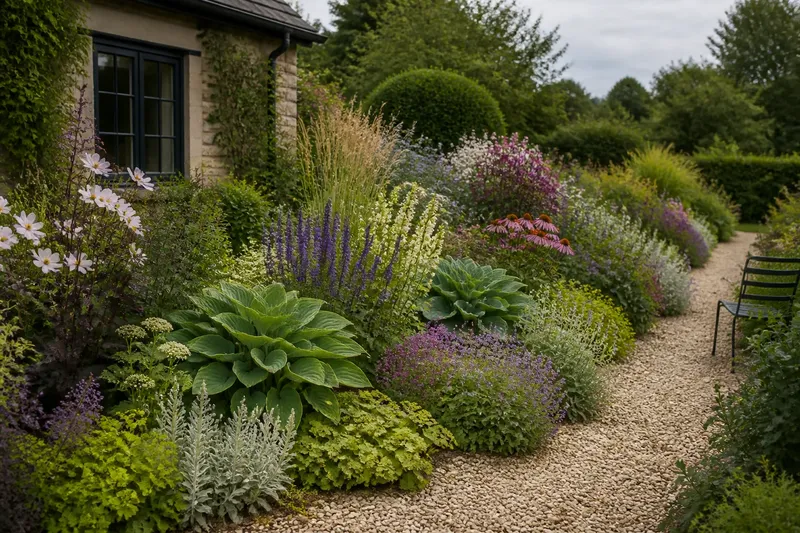
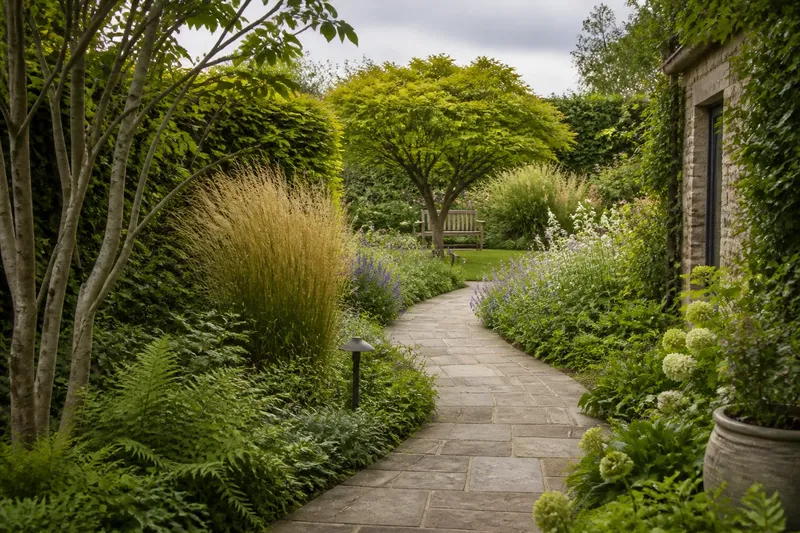
How many plant varieties does a border really need? If yours feels busy but not especially lively, the answer may be fewer kinds repeated with more intention. Plant variety can add contrast, but repeating a handful of well-chosen plants gives the eye a pattern to follow and lets individual forms register.
The goal is not a rigid strip of identical plants. It is a planting in which shapes and colors return often enough to feel connected, with selected changes to keep the view engaging. Work through the border in order: notice what is happening, choose a visual anchor, then edit and repeat.
Read the Existing Border
Look at the bed from the places you use most: a doorway, a window, a patio chair, or the point where you enter the garden. A border that seems balanced up close may look scattered from the house, where its overall pattern is easier to see.
Notice where your eye pauses and where it jumps. A long succession of unrelated flower shapes, colors, and leaf textures can make the whole bed compete for attention. The problem is not necessarily the number of plants; it is often that too many visual features appear only once.
Make a simple inventory before buying anything. Write down the plants already present, noting their broad role rather than every cultivar detail:
- Which plants make the strongest clumps of foliage?
- Which flower colors appear in several places?
- Which plants have a distinctive outline, such as upright spikes or rounded leaves?
- Where are the largest gaps in the border?
- Which plants seem isolated, weak, or out of scale with their neighbors?
This quick record separates a useful repeat from a plant that merely happens to be available. Keep plants that already provide a clear shape or color, and set aside anything that does not suit the site or the intended effect. Check plant labels and local guidance for the conditions and restrictions that apply before adding or moving plants.
Choose a Visual Anchor
Select one plant, or a small pairing, to carry the border’s recurring pattern. It might be a clump-forming perennial with sturdy leaves, a grass that makes a repeated upright mark, or a low plant that links the front edge. Choose for visible qualities that matter from your main viewing point, not simply because a plant is unusual in a nursery pot.
Consider how the anchor looks beyond its flowering moment. Foliage shape, height, and the outline of a clump can remain legible after a short bloom has passed. A plant with a useful form across more than one part of the growing season gives the repeated pattern something to work with for longer.
Keep the anchor’s needs compatible with the border. A sun-loving plant is a poor choice for a shaded pocket, and a plant that wants consistently damp soil may struggle among neighbors suited to dry ground. Repetition works best when the repeated plant can grow well in each place where you plan to use it.
Think of the anchor like a familiar refrain in a song: it returns to make the changes around it easier to hear. In a border, the repeated plant gives the eye a point of recognition, so a contrasting flower or leaf can stand out without having to shout.
Map the Repeats
Before dividing plants or shopping for more, sketch the bed as a set of loose zones. Mark the main viewing angle, existing groups, and open spaces. Then place the anchor in more than one zone, allowing it to appear in generous clusters rather than as isolated single plants.
Clusters should relate to one another without forming a straight row. Offset one group from the next, and let nearby plants overlap in the view. This creates a rhythm that feels connected but not mechanically planted. If the bed is viewed from both sides, distribute the repeats so the pattern works from each approach.
Next, assign supporting roles to the plants you keep. A border might combine one upright form, one rounded or spreading form, and a contrasting leaf texture around the anchor. These are visual roles, not a requirement to use a particular number of species. Several plants can share a role, but give each a reason to be there.
Say you have a border with scattered flowering perennials and an open patch near the middle. Imagine choosing an existing mound-forming perennial as the anchor, then sketching three generous groups that lead the eye through the bed rather than lining up across it. The expected observable result is a recurring foliage shape that connects the groups, while the other flowers read as accents rather than a string of unrelated specimens.
Edit Before Adding
Editing does not mean clearing out every plant that differs from the anchor. It means deciding which contrasts help the pattern and which ones interrupt it. Keep a distinctive plant if it provides a clear seasonal moment, useful structure, or a leaf form that makes the repeated foliage more apparent.
Look for one-off plants that contribute little beyond another color or texture. If several small specimens each make a separate visual statement, consider grouping some together or removing a few that are healthy but poorly placed. A single rare-looking plant surrounded by other single specimens often has no visual relationship to the rest of the bed.
Make changes in manageable portions. Mark plants for relocation with temporary labels or small stakes, then view the arrangement from the house and garden entrance. This gives you a chance to adjust the composition before disturbing roots. Move only plants suited to the new site, and leave plants that are declining or ill adapted for a separate diagnosis rather than using them as the basis of a new group.
When splitting or moving plants, use clean hand tools and choose a time suited to the plant and local conditions. Follow the plant’s care guidance for handling, watering, and spacing. Keep space for clumps to develop; an arrangement that looks full at planting can become crowded as plants mature.
Use Contrast Deliberately
Repetition gives a border its underlying rhythm; contrast supplies the variation. Choose contrasts that are easy to read: fine leaves beside broad ones, upright forms beside rounded clumps, or a concentrated flower color among quieter foliage. If every plant differs in every way, the eye has no stable pattern to return to.
Limit the number of strong contrasts visible at once. A bright flower, a dramatic leaf, and an unusual shape can each deserve attention, but scattering all three evenly through the whole bed makes them compete. Group one contrast in a clear place, then let the anchor recur nearby to tie it back to the larger planting.
Color can repeat without being identical. A flower color may return in several groups, or a foliage tone may echo a nearby plant. Judge those relationships from your normal viewing distance: shades that look distinct in a plant catalog may blend in the border, while a small patch of an unexpected color may dominate from across the lawn.
Also consider what happens when flowers are absent. If the pattern depends entirely on short-lived blooms, the border may lose its structure between flowering periods. Let foliage shape and clump placement carry some of the visual connection, then use seasonal flowers as changing accents.
Check the Pattern?
How many varieties should I use?
There is no ideal count that suits every border. Keep a variety if it supports the planting’s conditions or adds a distinct, legible role; reduce varieties that create isolated visual notes without contributing to the larger pattern.
Does repetition mean planting a straight row?
No. Repeat a plant in separate groups and offset those groups so the eye encounters them at different points. A straight line may suit a formal design, but a loose border often feels more natural when repeated shapes are staggered.
Can I repeat plants with different bloom times?
Yes, as long as the underlying connection remains visible. Foliage form, height, or a recurring color can link plants when their flowers appear at different times.
What if I already own many different plants?
Start by grouping what is already there, rather than discarding plants simply to reduce variety. Reposition compatible plants into more legible clusters, then remove or relocate only those that do not fit the border’s conditions or visual purpose.
Let the Border Settle
After planting or rearranging, give the composition time to grow before making another large round of changes. Step back from the same viewpoints and notice whether the anchor returns clearly, whether contrast has a place, and whether gaps still break the pattern. Small adjustments are easier to judge once the plants have resumed growth.
Plant variety in a border is most useful when each kind contributes something the others do not. If the bed feels scattered, repeat a few strong forms, keep the contrasts that sharpen them, and leave enough room for the groups to develop. That is often a more interesting planting than a collection of one-off choices, because the eye can recognize its rhythm and still have details to discover.